
Skin Facts
A broad guide to skin physiology, hydration, indoor humidity, the Dry Skin Index, UV exposure, and environmental stressors.
SKIN AND ENVIRONMENTAL STRESSORS
Your skin constantly responds to indoor and outdoor stressors--and so should your skin-care practices!
Basic Skin Physiology
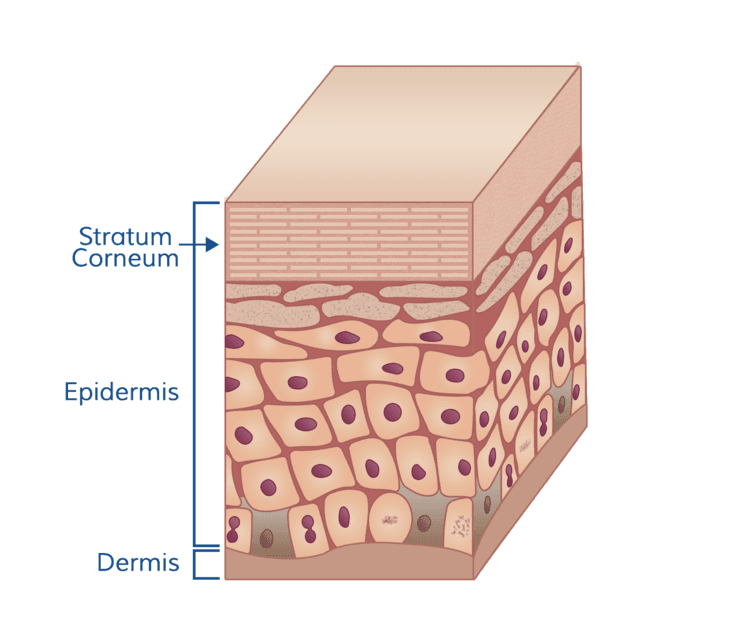
The outer layer of the skin is called the " stratum corneum " and it serves as the primary barrier between the exterior environment and internal organs. The barrier function of this exterior skin layer is impacted by both indoor relative humidity and temperature.
The three main components of the stratum corneum are: corneocytes, intercellular lipids, and corneodesmosones (intercellular adhesive junctions between corneocyctes).
Skin Hydration
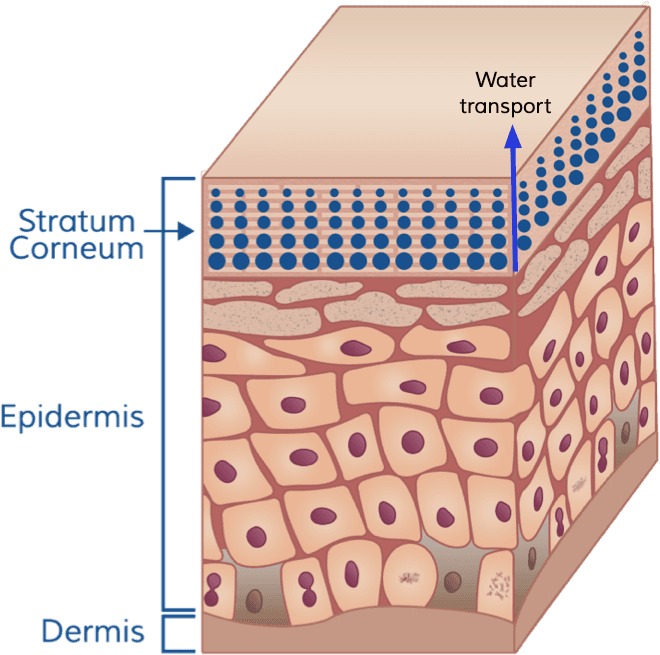
The optimal physiological functioning of the stratum corneum depends mainly on its water content or " hydration ". The outer layer of skin controls hydration via its barrier function, water sorption/desorption, and water diffusion.
Water is constantly released from the skin surface and is referred to as " Transepidermal water loss " or TEWL .
Values of TEWL change according to skin location, age, and the level of ambient relative humidity.
Skin and Indoor Relative Humidity
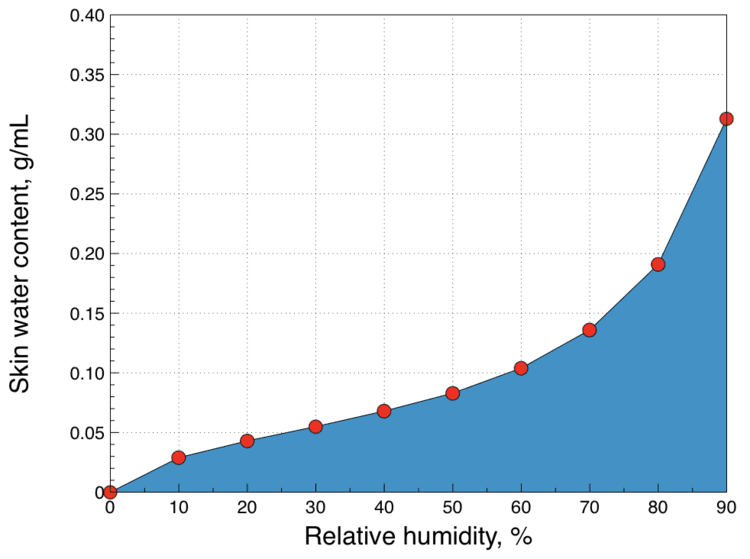
The hydration of the outer layer of the stratum corneum is directly linked to the humidity of ambient air. In fact, as the water content of skin changes in response to ambient humidity, its biochemical and physical properties are altered as well!
Important changes include: (1) increasing thickness of the stratum corneum with increasing humidity, (2) increasing TEWL with decreasing humidity, and (3) increasing skin stiffness with decreasing humidity and skin water content.
Skin Biochemistry and Biomechanics
The structures of both lipids and proteins within the stratum corneum change in response to ambient humidity, which in turn can impact its barrier function.
Similarly, as the water content of skin decreases along with indoor temperatures , mechanical drying stresses increase, which can produce skin roughness and possibly result in skin cracking.

Exposure to Dry Indoor Air
People spend about 90% of their time indoors and consequently indoor humidity is a key determinant of the water content of the stratum corneum.
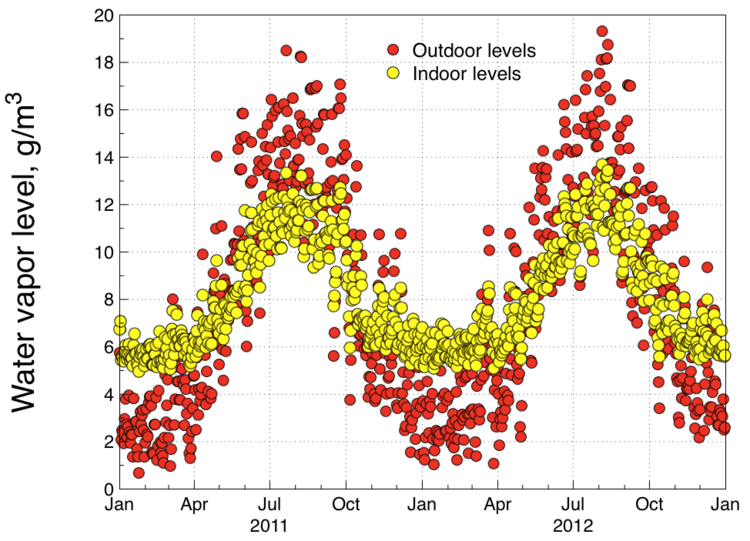
Indoor humidity, in turn, is a function of (1) the water content of outdoor air, (2) sources of water vapor indoors (e.g., showers, cooking, humidifiers, etc.), and (3) building properties (e.g., air exchange rate with outdoor air, absorption/desorption of water from building materials, furniture, etc.).
Seasonal Variations in Indoor Humidity
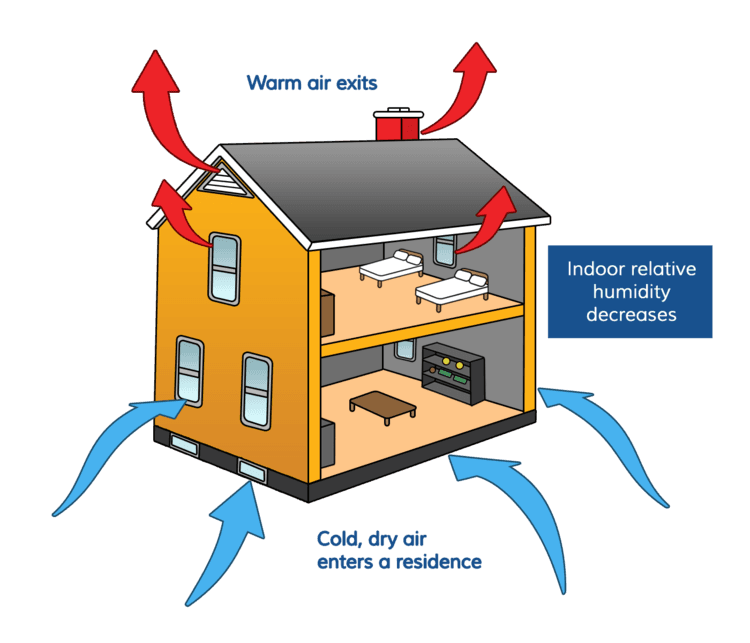
In the winter the water vapor content of outdoor air (in grams of water vapor per cubic meter of air) decreases as temperatures decline because cold air holds less water vapor than warm air. As a result, the cold, dry air entering a warm house or apartment reduces indoor relative humidity.
Conversely, in the summer outdoor water vapor levels increase and so does indoor humidity.
Skin and Solar Ultraviolet Radiation
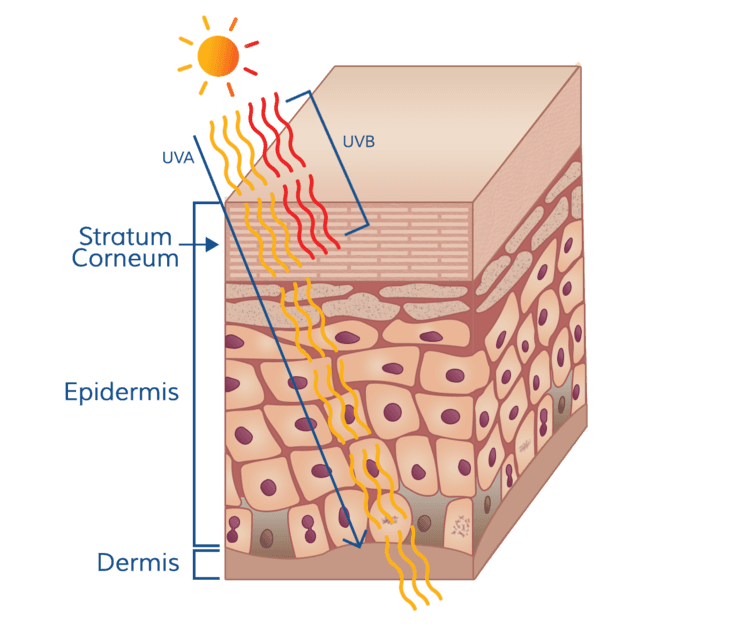
The solar radiation spectrum includes ultraviolet (UV) radiation that can penetrate and interact with skin tissue:
UVA (315 to 400 nm in wavelength)
UVB (280 to 315 nm)
UVA radiation penetrates through the epidermis into the dermis, whereas UVB radiation is mainly deposited in the epidermis.
Sunlight Exposures
Exposures to the sun's rays have both beneficial and harmful aspects, which vary according to your lifestyle, age, etc.
Beneficial aspects
Vitamin D is produced within skin by UVB-induced photochemical reactions. This vitamin supports healthy functioning of bones and other physiological processes.
Production of nitric oxide via UVA irradiation can lower blood pressure.
Physical exercise, whether conducted indoors or outdoors in the sun, provides many health benefits.
Harmful aspects
Short-term exposure (~minutes to hours) to elevated UV radiation can cause skin reddening (erythema) or sunburn.
Long-term UVB exposure can cause basal cell and squamous cell carcinomas.
Chronic exposure to UVA/UVB increases the risk of cutaneous melanoma.
Photoaging of skin is associated with cumulative exposure to UV radiation.
Dermidia Guide Lite
Turn this science into weekly guidance
Dermidia Guide Lite turns this science into a saved dashboard, seven-day outlook, compact 52-week context review, and weekly care cue for your area. Sign in by secure email link — no password or credit card.
Your email is used for Dermidia Guide Lite and is not shared with 3rd parties.