
Learn the Dry Skin Index
See when indoor air is more likely to dry your skin
The Dry Skin Index, or DSI, is a 0-10 environmental scale that describes indoor drying stress on skin. It combines temperature and relative humidity through the chemical potential of water vapor, the key physical signal behind moisture movement.
Visual Guide
How indoor air, skin, and moisture control fit together
These graphics explain the core DSI story: the skin barrier, the house as a moisture-buffering system, and the everyday tools that can compensate for indoor drying stresses on skin.
Infographic 1
Buildings exchange and buffer water vapor
Main takeaway: air exchange moves water vapor in and out, while wood and other materials can buffer humidity swings inside the home.

Infographic 2
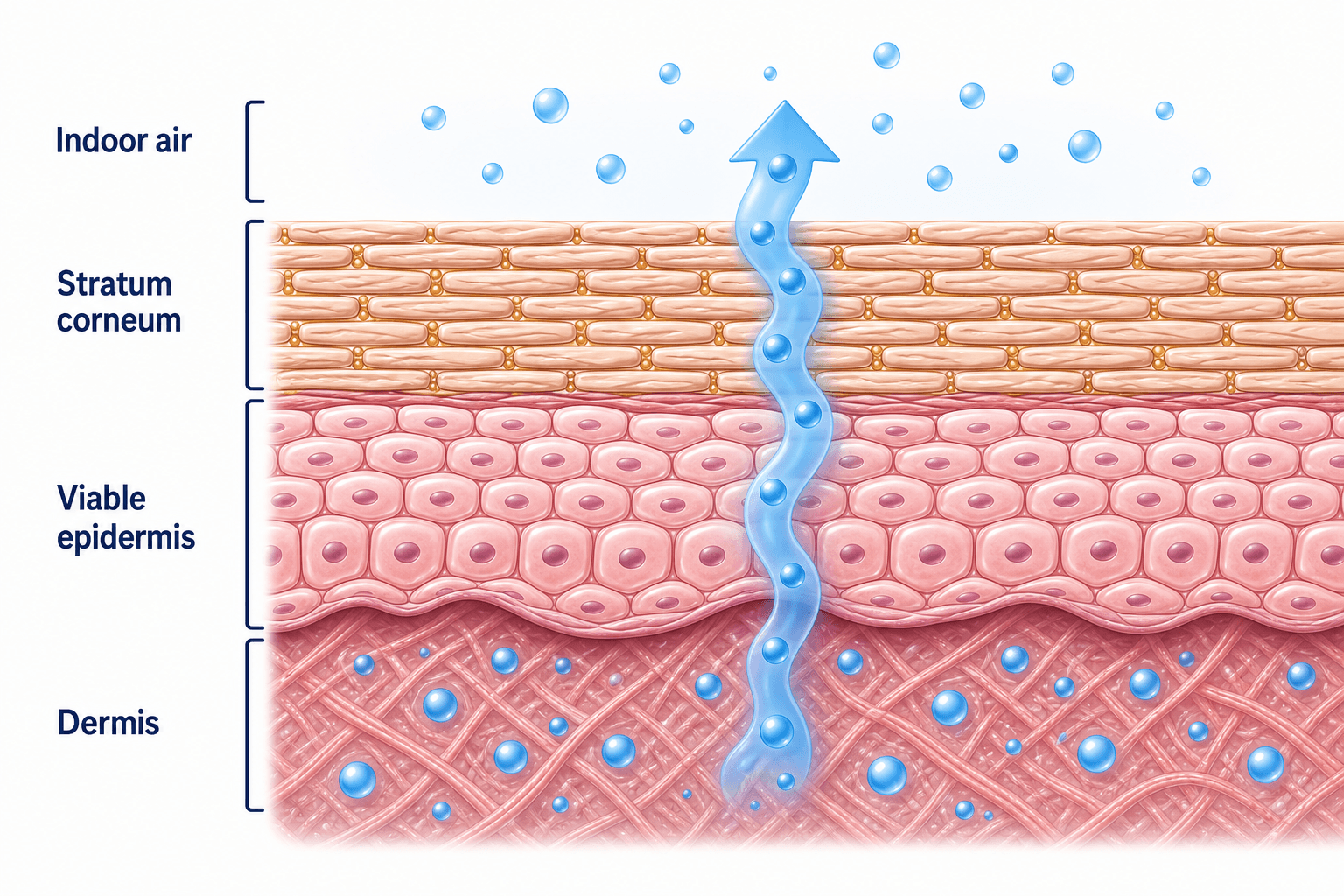
Water loss reflects outward flow and stratum corneum sorption
Main takeaway: when indoor air is dry, water moves outward from deeper hydrated skin while the outer stratum corneum hydrates or dehydrates according to surrounding water activity. Both processes are governed by water chemical potential.
1. Outward water flux
Deeper hydrated skin supplies water to dry air.
2. Stratum corneum sorption
Water vapor shifts outer-layer hydration.
Water activity / chemical potential
The DSI estimates the drying stress that shifts this balance.
Infographic 3
Dry skin web searches rise when seasonal indoor stress rises
Main takeaway: people search for dry skin most during heating season, when skin responds to environmentally driven stress as measured by the DSI.
 Source: Google Trends
Infographic 4
Skin hydration depends on care and room humidity
Main takeaway: drying stress can affect people across ages, so care often means keeping hands, arms, legs, and face hydrated while also managing room humidity.

Dermidia Guide Lite
Ready to turn the DSI story into a weekly signal?
The visual guide explains why indoor drying stress matters. Dermidia Guide Lite turns that same science into a saved dashboard and weekly outlook for your area.
Your email is used for Dermidia Guide Lite and is not shared with 3rd parties.
The DSI tiers
Dermidia groups DSI values into practical tiers. The wording is intentionally about environmental stress and everyday skin comfort, not medical diagnosis or treatment.
Low Risk
Keep your gentle moisturizing wash routine steady. Use a leave-on moisturizer only where skin already feels dry.
First Alert
Keep moisturizing body wash daily. After bathing, apply a leave-on moisturizer to areas that feel tight, rough, flaky, or itchy.
Special Care
Apply a fragrance-free cream or thicker lotion after bathing to dry-prone areas. Add an evening application during Special Care windows if skin feels tight or rough.
Enhanced Care
Use lotion or cream on dry-prone areas during the highest-stress days. Consider room humidifier use at night on peak DSI days.
Dermidia Guide Lite
Want this translated into weekly care guidance?
Dermidia Guide Lite provides a saved dashboard and weekly care cue built around your area. Sign in by secure email link — no password or credit card.
Your email is used for Dermidia Guide Lite and is not shared with 3rd parties.
Who Dermidia is for
Dermidia is designed for people who notice seasonal dryness or want a clearer signal for planning healthy skin care habits. Seniors are an important audience because skin often becomes more dryness-prone with age, but the DSI can be useful for many households.
- Adults whose skin feels drier during heating season
- Seniors and caregivers planning everyday skin comfort routines
- People living in dry climates, apartments, or highly heated homes